When temperatures drop in Auckland, it is easy to put the pool cover on, turn off the pump, and forget about the backyard oasis until October. Out of sight, out of mind—right? Wrong!
Unfortunately, neglecting your pool during the cooler months is one of the most expensive mistakes a homeowner can make. Beyond just turning green, an unmaintained pool over winter subjects your water chemistry and mechanical systems to severe structural damage.
The Auckland Winter Dilemma: Heavy Rain & Chemical Dilution
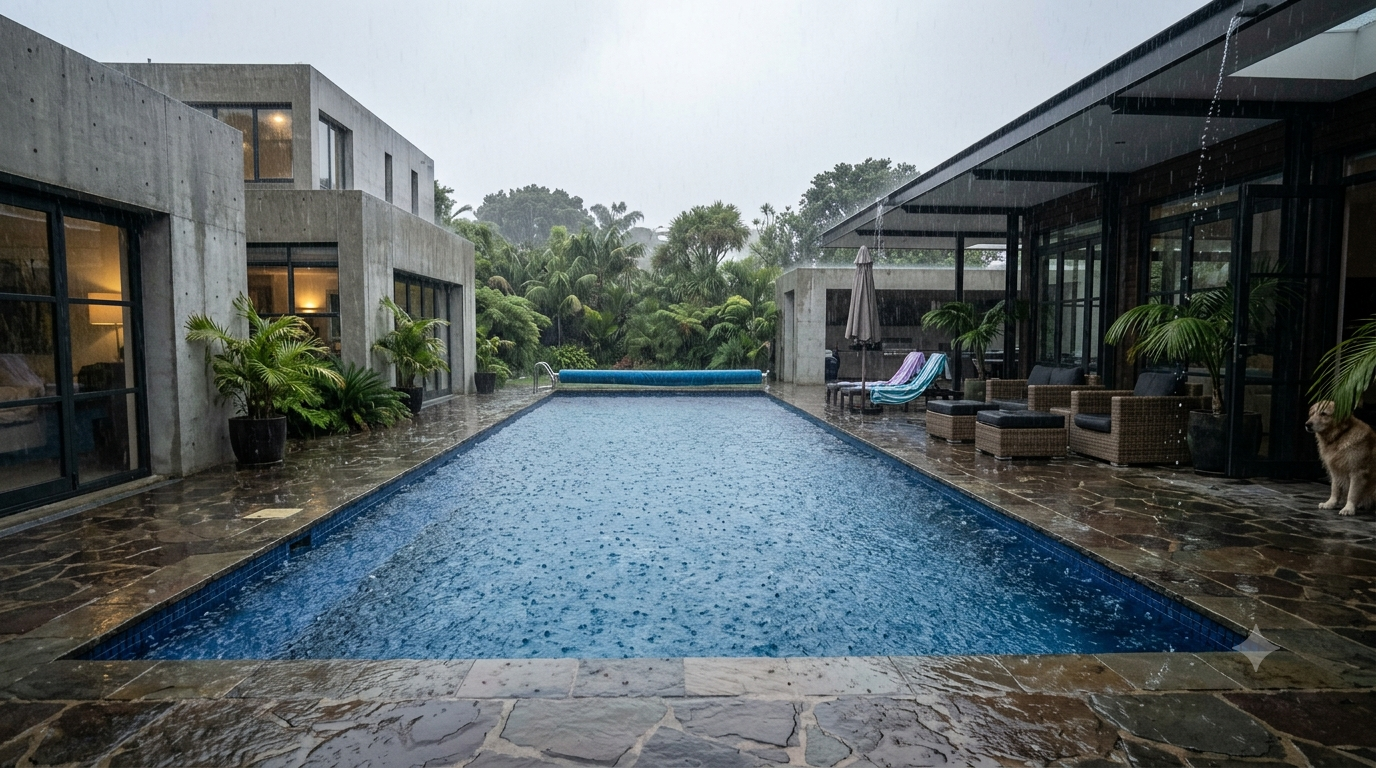
Auckland winters are notorious for sustained downpours, high humidity, and strong coastal winds. Rainfall does far more than just raise your water level; it drastically alters your pool’s fundamental chemistry.
-
Chemical Dilution: Hundreds of liters of pure rainwater dilute your sanitizer (free chlorine), cyanuric acid (stabilizer), and total alkalinity, calcium and salt levels.
-
pH Volatility: Rainwater is naturally acidic (typically pH 5.0–5.5). As heavy rain mixes with your pool, it can drag the pH down, leaving your water acidic and uncontrolled, with a diluted calcium & alkalinity level, this could be a recipe for disaster.
The Nitrogen & Light Cycle: How Sunlight Degrades Water Chemistry
Even on overcast winter days, ultraviolet (UV) radiation and ambient light continuously affect your water chemistry.
When organic debris—such as air born dust, leaves, and bird droppings—enters the pool, it introduces ammonia and nitrogenous compounds.
-
Nitrate Accumulation: Sanitizers oxidation converts these organic nitrogen compounds into nitrates
-
The Sunlight Effect: Sunlight breaks down free chlorine (via UV photolysis) while simultaneously providing the radiant energy algae need to process nitrates.
-
The Algae Trigger: Nitrates are essentially liquid fertilizer for algae. Combined with natural sunlight penetrating your pool cover or surface, high nitrate levels turn your dormant pool into a perfect breeding ground for persistent green, yellow, or black algae blooms.
Phosphates: The Silent Winter Contaminant
Along with nitrates, winter brings a surge in phosphates.
Phosphates enter your water via:
-
Wind-blown soil and garden fertilizers.
- Decaying autumn leaves sitting at the bottom of the pool.
-
Rain runoff carrying environmental pollutants.
As leaves decompose over winter, they dump heavy concentrations of orthophosphates directly into the water column. While chlorine can sanitize bacteria, chlorine does not destroy phosphates. The phosphates accumulate silently, acting as an endless food source for algae the moment temperatures begin to warm up.
The LSI Danger: Acidic Water Kills Equipment and Surfaces
The most destructive consequence of winter pool neglect is the severe drop in your pool’s Langelier Saturation Index (LSI).
The LSI measures whether your water is corrosive, balanced, or scale-forming. It accounts for five key variables:
LSI = pH + TF + CF + AF – TDS
(Where TF is Temperature Factor, CF is Calcium Hardness Factor, AF is Alkalinity Factor, and TDS is Total Dissolved Solids).
Why Winter Destroys LSI?
-
Cold Water Multiplier: As water temperature drops, the LSI value automatically decreases, pushing water closer to a corrosive state.
-
Acidic Rain Influx: Lowers pH, Calcium and Total Alkalinity further.
The Disadvantages of a Negative LSI (<-0.30)
When water is corrosive, it becomes “hungry” for calcium. To balance itself, it aggressively leaches minerals directly out of your pool’s infrastructure:
-
Plaster & Concrete: Causes severe etching, roughness, pitting, and structural degradation.
-
Vinyl & Fiberglass: Causes liners to become brittle, fade, and crack ( Even liner pool vinyl contains calcium chloride )
-
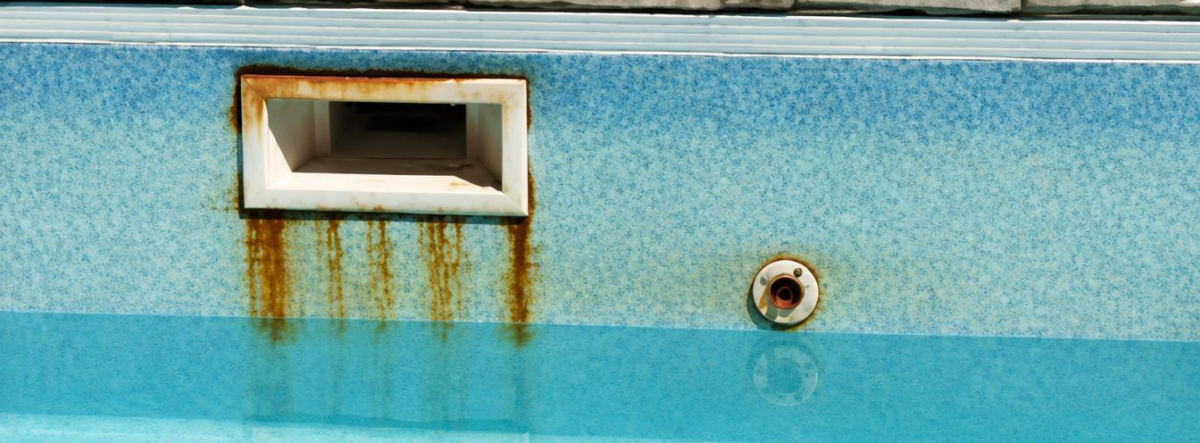
Equipment Destruction: Acidic, negative-LSI water eats away at mechanical components—corroding salt chlorinator cells, dissolving copper heat exchangers, and rusting pump seals.
Prevention vs. Remediation: The Financial Math
Neglecting a pool over winter to save on chemical costs or electricity is a severe false economy.
| Maintenance Approach | Winter Action | Spring Re-opening Cost | Equipment Lifespan Impact |
| Proactive Winter Care | 2-4 hrs pump runtime/day, monthly testing, phosphate remover, maintaining LSI balance. |
Low ($ 200-$400)
Minor chemical adjustment; crystal clear within 24 hours. |
Maximum
Heaters, pumps, and surfaces reach full design lifespan. |
| Winter Neglect | Equipment turned off, no chemistry checks, debris left to rot. |
Extremely High ($800–$1,500+)
Massive chemical doses (shock, algaecides, flocculants), repeated filter backwashing/media replacements, professional green-to-clean services. |
Severely Reduced
Early cell replacement, etched plaster, copper heater leaks, pump seal failures. |
Key Takeaway for Pool Owners
A winterized pool is not a turned-off pool. By running your filtration system for a few hours each day, keeping phosphates near zero, and balancing your LSI against acidic Auckland rain, you protect your investment, extend your equipment’s lifespan, and ensure your pool is ready for a seamless swim when spring arrives.